


Signal Feed

Latest Articles

View All
How to Programmatically Create Custom Calendar Events in Your App
Artificial Intelligence

How to Programmatically Create Custom Calendar Events in Your App

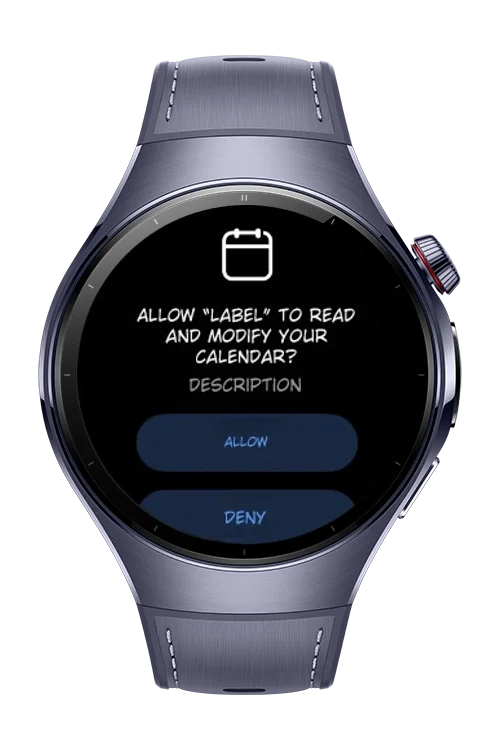
Programmatically creating custom calendar events in HarmonyOS is handled through the system's built-in Calendar Manager service, which provides a structured API for managing calendar data at the application level. To create a calendar event programmatically, developers work with the `calendarManager` module, starting by requesting the necessary user permissions, then obtaining a calendar instance, and finally constructing and inserting an event object with the desired properties such as title, start time, end time, location, and recurrence rules. The core flow looks like this: acquire permissions via `requestPermissionsFromUser`, retrieve or create a calendar using `getCalendar` or `createCalendar`, then build an `Event` object and call `addEvent` to persist it. The Calendar Manager handles conflict resolution and syncing with the device's native calendar UI automatically. This approach gives apps a clean, permission-gated path to calendar integration without requiring direct database access, keeping the implementation both secure and maintainable across HarmonyOS versions.

Mar 10, 2026 826 views
How Qualcomm and Neura Robotics Are Shaping the Future of AI-Powered Humanoid Robots
Artificial Intelligence

How Qualcomm and Neura Robotics Are Shaping the Future of AI-Powered Humanoid Robots

Neura Robotics has announced plans to integrate Qualcomm's newly unveiled Snapdragon IQ10 processors into its next-generation humanoid robots, following the chip's debut at CES. The IQ10 — purpose-built for edge AI inference in robotics — brings on-device processing power that reduces latency and cloud dependency, two persistent bottlenecks in real-time robotic decision-making. For Neura, this partnership signals a strategic shift toward tighter hardware-software co-design, a trend increasingly defining competitive advantage in the humanoid robotics space as players race to close the gap between lab performance and real-world deployment.

Mar 09, 2026 422 views
CI/CD con GitHub Actions para Python: lecciones reales de tres fallos en producción
Artificial Intelligence

CI/CD con GitHub Actions para Python: lecciones reales de tres fallos en producción

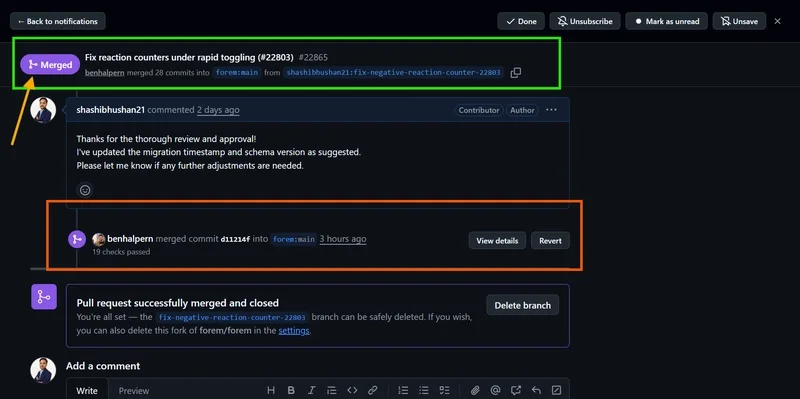
Era un viernes a las 4pm cuando hice push de un cambio aparentemente trivial a main. Sin CI configurado correctamente, el deploy se ejecutó sin correr las pruebas. El error era simple — un import que funcionaba en local pero fallaba en producción por una diferencia de entorno que nadie había documentado. Lo que siguió fue una hora de debugging en caliente, logs contradictorios y la presión de revertir sin romper nada más. El fix fue de dos líneas. El costo, mucho mayor. La lección no fue "no hagas deploy los viernes" — fue que un pipeline sin gates de calidad convierte cualquier día en viernes a las 4pm. CI no es burocracia; es la red que atrapa lo que el contexto humano inevitablemente deja pasar.

Mar 09, 2026 894 views
Arquitectura Orientada a Eventos en 2026: Cómo Reemplazar REST entre Microservicios con un Enfoque más Escalable
Artificial Intelligence

Arquitectura Orientada a Eventos en 2026: Cómo Reemplazar REST entre Microservicios con un Enfoque más Escalable

# When Microservices Become a House of Cards Ten months ago, a seemingly routine deployment brought down an entire service chain: a notifications service called inventory, which called pricing — and a poorly synchronized deploy took the whole stack down with it. That cascade failure is the kind of distributed systems nightmare that exposes a hard truth about microservice architectures — **loose coupling in theory doesn't guarantee resilience in practice.** The real problem wasn't the failed deployment. It was the implicit synchronous dependency chain binding three services into a single point of failure, with no circuit breaking, no fallback logic, and no graceful degradation. One bad deploy propagated upstream like a ripple through tightly coupled HTTP calls masquerading as independence. The incident highlights what experienced platform engineers know: **service boundaries drawn on architecture diagrams rarely reflect runtime blast radius.** Without async communication patterns, bulkhead isolation, or retry/timeout contracts between services, a microservice mesh can fail as monolithically as the legacy systems it replaced. The takeaway isn't to abandon microservices — it's to engineer for failure as a first-class concern. That means implementing circuit breakers, defining explicit SLAs between service consumers and producers, and stress-testing dependency chains before a production deploy does it for you.

Mar 09, 2026 673 views